
CANCEL
As core auxiliary equipment in mid-to-high-end plastic sheet extrusion lines, melt pumps are primarily installed between the extruder screw end and the die inlet. Leveraging “positive displacement conveying + precise pressure/flow closed-loop control” technology, they specifically address critical challenges in sheet extrusion such as uneven thickness, high energy consumption, and suboptimal melt quality. Their application value extends beyond product quality enhancement to achieving cost reduction and efficiency gains in production. They are essential components in modern production lines for PET, PP, and other sheet materials, particularly suited for high-precision manufacturing scenarios. Core Application Advantages of Melt Pumps in Sheet Extruders. Through targeted structural design and functional enhancements, melt pumps effectively resolve the aforementioned challenges, offering the following specific advantages:
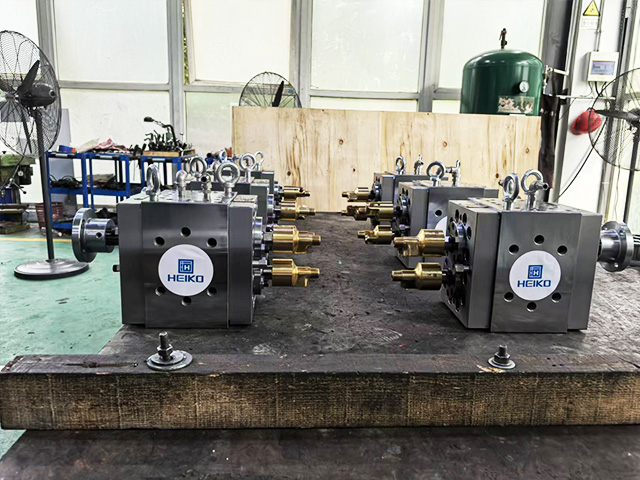
1. Precise and stable control of pressure and flow rate, fundamentally resolving sheet thickness inconsistencies
Core Principle: As a positive displacement conveying device, the melt pump's output flow rate correlates solely with pump speed and chamber volume. Within ±10% fluctuations of inlet pressure, it maintains stable flow output unaffected by pressure variations, achieving decoupled control of flow and pressure.
Application Effect: Traditional extruders inherently exhibit ±2% screw speed fluctuations, resulting in sheet thickness tolerances typically ranging from ±5% to ±8%. When paired with a melt pump, flow control precision improves to ±0.5%, reducing sheet thickness tolerance to ±1% to ±2% (with higher precision achievable on certain high-end models). This fully meets production standards for high-precision products like pharmaceutical-grade PVC rigid sheets and electronic carrier tape sheets.
Typical Application: During PET thermoforming sheet production (base material for food packaging boxes), the melt pump effectively compensates for melt inconsistencies caused by raw material moisture fluctuations. This ensures consistent sheet thickness both crosswise and lengthwise, significantly reducing scrap rates in subsequent thermoforming processes and improving molding yield.
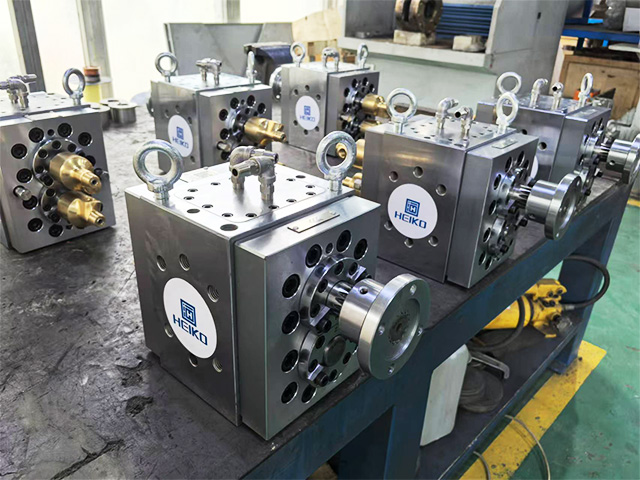
2. Reducing Extruder Operational Load for Energy Savings and Consumption Reduction
Traditional Pain Points: Conventional extruders must simultaneously handle two core tasks—melt plasticization and high-pressure material delivery to the mold. Especially in wide-web sheet production scenarios, complex mold runner structures require the screw to overcome high back pressures of 20–30 MPa. This not only leads to elevated motor loads and surging energy consumption but also accelerates screw wear, shortens the lifespan of vulnerable components, and increases equipment maintenance costs.
Melt Pump Empowerment: The melt pump proactively handles high-pressure melt transportation, allowing the extruder to focus solely on melt fusion and plasticization. This significantly reduces screw backpressure by 30–50%, corresponding to a 15–20% decrease in motor operating current. Overall production line energy consumption drops by 10–15%, achieving dual optimization of energy consumption and equipment wear.
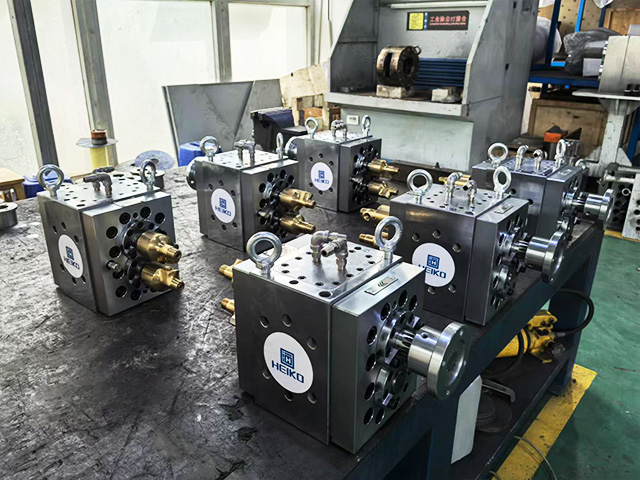
3. Optimizing melt quality to reduce sheet appearance and performance defects
Melt Homogenization and Enhanced Mixing: Equipped with static mixing elements, the melt pump performs secondary agitation and homogenization during melt conveyance through gear-meshing shear or specialized mixing chamber structures. This effectively eliminates melt dead zones and uneven masterbatch dispersion, significantly reducing sheet defects such as color variation, streaks, and bubbles while enhancing surface finish and color consistency.
Precision Temperature Control Assurance: The melt pump features an independent temperature control system, enabling precise regulation of melt temperature within ±1°C. This prevents melt degradation caused by fluctuations in extruder outlet temperature.
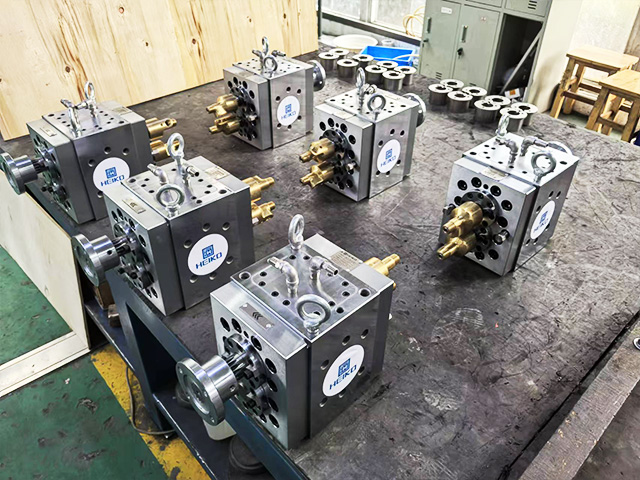
4. Expanded Process Window for Diverse Materials and Complex Conditions
High-Viscosity Material Compatibility: For challenging materials like PPR, PC, and PEEK, traditional extruders often lack sufficient pressure to force melt into molds. The melt pump delivers up to 60MPa outlet pressure, enabling stable extrusion of these materials and broadening production line material compatibility.
Optimized Material Changeovers: During production transitions between different grades or colors of raw materials, melt pumps rapidly purge residual melt from the pump chamber and flow channels. This significantly reduces the generation of transition material (unqualified sheets resulting from mixed raw materials), lowering waste from 50–100 kg in traditional processes to 10–20 kg. This approach minimizes material loss and production costs.
Wide-Width Sheet Production Adaptation: For molds producing sheets wider than 2m, the melt pump employs optimized flow channel design to evenly distribute melt across all mold branches. This effectively resolves the traditional “thick edges, thin center” thickness deviation issue, ensuring consistent thickness across the entire sheet width. This meets the demands of high-end applications for wide-width sheets.
PREVIOUS: Belt-Type Fully Automatic Screen Changer
NEXT: 最后一页
Material selection of melt pump
What materials can the melt pump transport?
Application areas of plastic extrusion melt pumps
Heiko Company had participated in the CHINAPLAS 2024.
Application of Melt Pumps in Mid-to-High-End Plastic Sheet Extruders
Belt-Type Fully Automatic Screen Changer
Applications and Scenarios for Screen Changers
Core Advantages of the Dual-Piston Large Filter Cartridge Screen Changer
Core Functions and Application Scenarios of Screen Changers
The Necessity of Adding Screen Changers to Extrusion Systems